
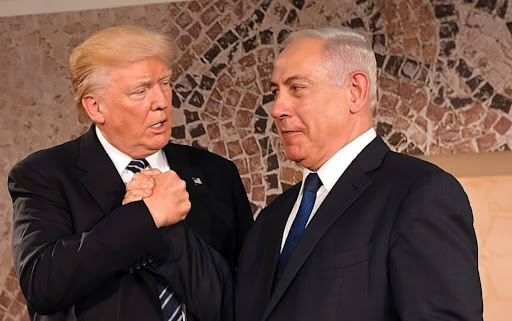
Something has been shifting in US President Donald Trump’s approach to the Iran conflict, and it is visible in the evolution of his public statements over the course of the campaign. The Trump who earlier suggested Iranians might soon have the opportunity to overthrow their government — implying American support for regime change as a war goal — has been replaced by a Trump who describes such an uprising as “a very big hurdle,” expresses skepticism about its feasibility, and defines success primarily in nuclear containment terms. Meanwhile, Netanyahu has not narrowed his ambitions at all — creating a widening gap.
Recalibration mid-conflict is not unusual — wars rarely unfold as planned, and leaders who adjust their objectives to match ground realities generally perform better than those who cling rigidly to initial formulations. Trump’s recalibration appears to reflect an accurate assessment of what is and isn’t achievable: nuclear containment through targeted military action is achievable; Iranian regime change through external military pressure is much more uncertain. The adjustment is strategically sound even if it represents a narrowing of earlier ambitions.
The recalibration also reflects the practical pressures of managing a complex coalition. Gulf allies want bounded escalation and predictable stability. Global energy markets want manageable conflict. American political audiences want clear objectives and visible progress. Netanyahu’s open-ended transformation agenda addresses none of these pressures well. Trump’s nuclear containment focus addresses all of them more effectively — at the cost of ambition.
The recalibration has created the most visible current gap between Trump and Netanyahu. Netanyahu has not recalibrated — his transformation agenda remains intact and his calls for Iranian regime change continue. The distance between a recalibrating Trump and an unchanged Netanyahu is greater now than it was at the campaign’s beginning — which is part of why the South Pars episode and its aftermath have generated the kind of public friction they have.
Director of National Intelligence Gabbard confirmed the objective divergence. Trump’s recalibration has made that divergence more explicit. Whether the recalibration deepens further — toward an even more bounded American objective — or whether events pull Trump back toward more expansive rhetoric depends on factors that are still in play.
