
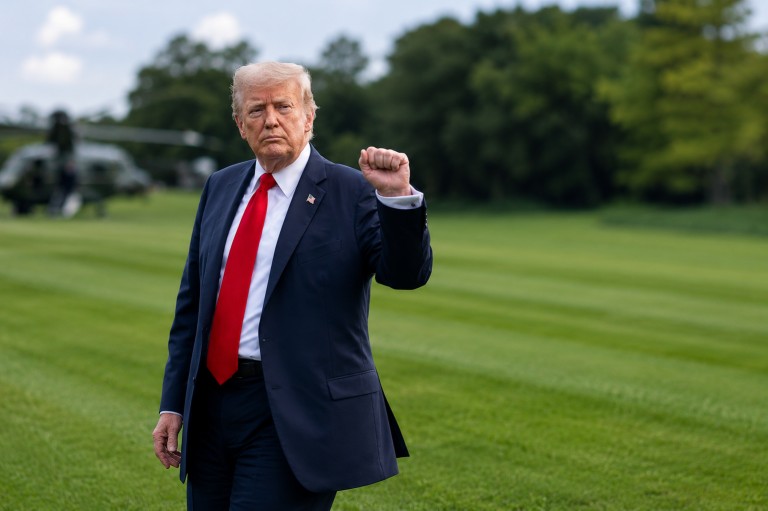
In a surprising turn of events, former U.S. President Donald Trump announced the deployment of 5,000 additional American troops to Poland, reversing a previous decision to reduce U.S. military presence in Europe. Just weeks earlier, the U.S. administration confirmed plans to withdraw approximately 5,000 troops from Europe, ceasing the rotation of thousands of personnel into Poland from Germany, which had sparked concerns among NATO members about America’s dedication to European security.
The abrupt change in strategy left NATO allies and U.S. defense officials perplexed, as they had already begun to adjust military plans based on the earlier troop withdrawal announcement. Trump’s decision to increase the U.S. military footprint in Poland was attributed to strong ties with Polish President Karol Nawrocki.
European leaders have acknowledged the uncertainty surrounding future U.S. military deployments in the region, particularly as tensions with Russia remain heightened due to the ongoing conflict in Ukraine. This development has prompted NATO members to closely monitor Washington’s evolving stance on its military commitments.
U.S. Secretary of State Marco Rubio noted that allies are aware of the United States’ ongoing review of its global military posture. He suggested that, despite the recent announcement, troop levels in Europe could still decrease over time. Currently, around 80,000 U.S. troops are stationed across the continent, and discussions among NATO officials continue regarding future defense strategies and troop allocations along the alliance’s eastern flank.
NATO Secretary-General Mark Rutte underscored the importance of European nations enhancing their own security capabilities in conjunction with U.S. support. This call for strengthened European defense highlights the necessity of a balanced approach to security amidst shifting U.S. military strategies.
