
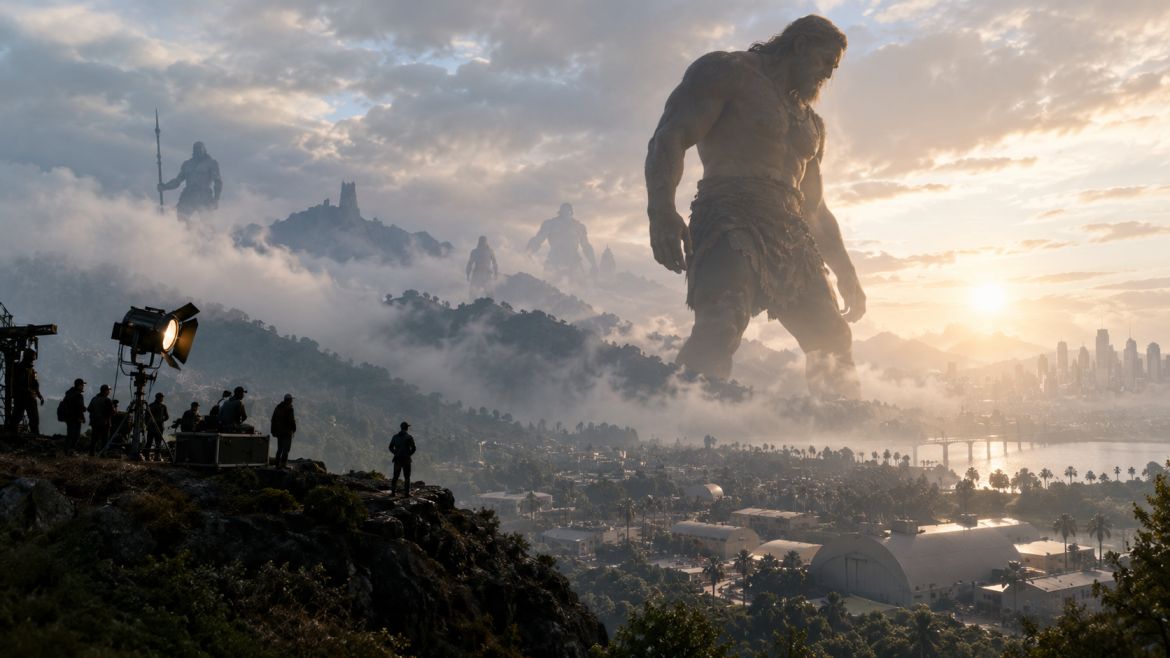
From mythological beasts to towering robots and gentle giants, the magic of cinema often lies in its ability to amplify the scale of its characters. A journey through film history reveals twenty memorable giants, each bringing its own charm or terror to the screen. At the pinnacle is Talos from “Jason and the Argonauts” (1963), a bronze colossus brought to life through Ray Harryhausen’s stop-motion wizardry. When Hercules’ greed awakens Talos, the guardian’s slow animation paired with Bernard Herrmann’s score creates a moment of unforgettable cinematic suspense.
Another standout giant is Fezzik from “The Princess Bride” (1987), portrayed by André the Giant, whose natural stature brings warmth and humor to the beloved character. The film forgoes special effects, instead letting André’s presence define Fezzik, making him one of cinema’s enduring gentle giants. Similarly, “The Thief of Bagdad” (1940) features a genie played by Rex Ingram, whose presence is both overwhelming and iconic, setting the stage for future fantasy films with its ambitious special effects.
In the realm of animation, Brad Bird’s “The Iron Giant” (1999) tells the story of a massive robot who befriends a young boy in 1950s America. The film explores themes of identity and sacrifice against a backdrop of Cold War paranoia. Meanwhile, Steven Spielberg’s adaptation of “The BFG” (2016) introduces audiences to the Big Friendly Giant, a 24-foot character brought to life by Mark Rylance’s motion-capture performance. Though visually polished, the film’s digital effects lend it a synthetic feel compared to Roald Dahl’s original tale.
The genre of fantasy and mythology offers its own collection of giants, such as the Cyclops Polyphemus in “The Odyssey” (2026), brought to life with a blend of practical effects and puppetry under Christopher Nolan’s direction. “Ulysses” (1954) also delves into Homer’s epic, with Kirk Douglas encountering the formidable Cyclops. In “The Green Knight” (2021), mysterious giants traverse the landscape in a scene that enhances the film’s mythical atmosphere. André Øvredal’s “Troll Hunter” (2010) introduces the giant Jötunn in a found-footage style inspired by Scandinavian folklore.
Other notable entries include “Attack of the 50ft Woman” (1958), which has become iconic thanks to its poster, and “The Amazing Colossal Man” (1957), reflecting 1950s atomic-age fears. “Big Fish” (2003) and “Fellini’s Casanova” (1976) offer more grounded takes on gigantism, integrating larger-than-life characters into their narratives. Finally, animated adventures like “Monsters vs Aliens” (2009) and the stone giants of “The Hobbit: An Unexpected Journey” (2012) continue to demonstrate cinema’s fascination with colossal figures. Each of these films, in its own way, underscores the enduring allure of giants in storytelling.
