
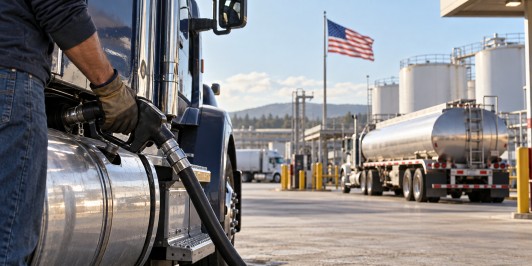
U.S. diesel prices have surged to record highs as the Trump administration considers implementing a temporary 90-day ban on diesel exports to bolster domestic fuel supplies. This potential policy aims to alleviate soaring prices by keeping more diesel within the country rather than exporting it to international markets. The administration hopes that increasing domestic availability could help lower costs for consumers.
However, experts caution that the impact of such a measure might be limited. Energy analysts note that the uneven distribution of diesel supplies across the United States poses a significant challenge. The majority of refining capacity is located along the Gulf Coast, while regions like the Northeast and West Coast are facing shortages. The existing pipelines are already operating near capacity, complicating the transfer of additional fuel to these areas.
Transporting diesel by alternative methods, such as water routes, presents further complications, potentially extending delivery times and increasing costs. Consequently, even if more diesel becomes available domestically, it might not lead to substantially lower prices in regions experiencing shortages.
Global market dynamics also influence U.S. diesel prices. International fuel prices and supply conditions play a crucial role, as U.S. refiners are financially incentivized to sell in overseas markets when global prices are higher. Recent disruptions in global energy supplies, including issues tied to the Iran conflict and attacks on Russian refining capacity, have further tightened worldwide diesel availability.
The U.S. has a history of imposing export restrictions during periods of energy market stress, such as the crude oil export limits following the 1973-74 Arab oil embargo. While these measures were phased out by 2015 due to increased U.S. oil production, the proposed diesel export ban could temporarily boost domestic supply. However, its overall effectiveness will depend on factors like refinery production levels, transportation capacity, regional demand, and global fuel prices.
Ultimately, while the proposed export ban might provide some relief, it is unlikely to resolve the broader supply and pricing challenges facing the diesel market. The move could lead to increased domestic availability, but if it reduces refiners’ profit margins, production might decline, potentially offsetting any benefits.
