
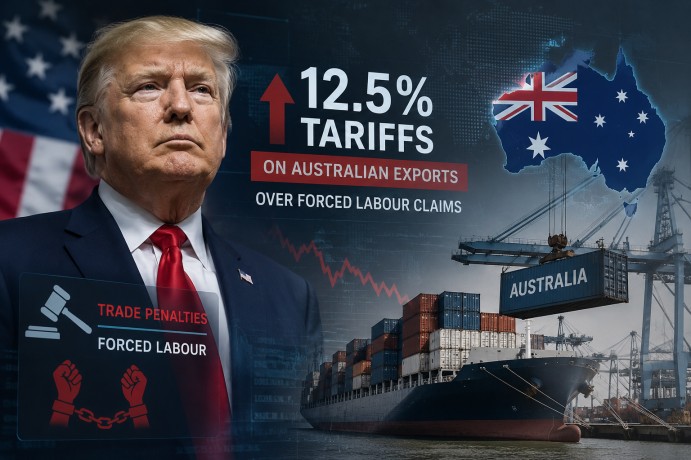
The United States has introduced a new 12.5% tariff on a variety of Australian exports, citing concerns over Australia’s efforts to prevent goods tied to forced labor from entering its supply chains. This decision has been met with strong opposition from the Australian government, which argues that the tariffs are unwarranted and violate the terms of the Australia-U.S. Free Trade Agreement. Trade Minister Don Farrell highlighted Australia’s robust laws against forced labor and modern slavery, calling on Washington to revoke the tariffs immediately.
The tariffs, while broadly applied, exempt crucial Australian exports such as beef, gold, several agricultural products, aircraft parts, and certain mineral and industrial goods. Despite these exemptions, the Australian government and industry leaders have expressed dissatisfaction, arguing that the move lacks substantial evidence and poses a risk to the trade relationship between the two nations.
Australian officials have warned that this decision could strain trade relations, as they believe it is based on insufficient grounds. Business groups and industry leaders have echoed these sentiments, labeling the tariffs as unfair and harmful to Australian exporters. They contend that the tariffs could have negative repercussions for businesses reliant on U.S. markets.
This development comes amid broader trade enforcement measures by the Trump administration, which is expanding tariffs affecting numerous countries over concerns related to forced labor. As these measures continue to unfold, there is growing apprehension about their potential impact on international trade dynamics, particularly for countries like Australia that have close trading ties with the United States.
