
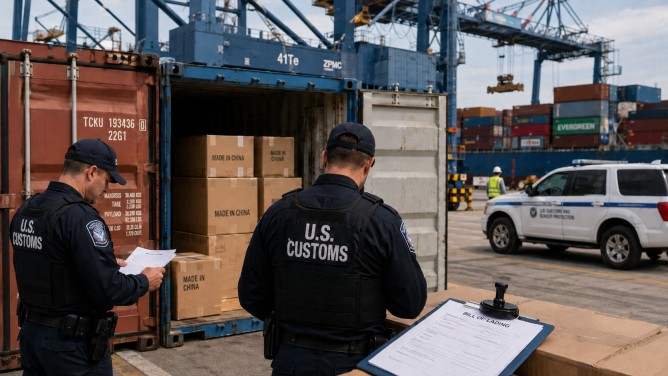
The United States has accused a coalition of 38 countries, alongside the European Union, of participating in what it calls a “shadow transshipment network.” This network allegedly allows goods from China, which are subject to high U.S. tariffs, to enter the American market through intermediary nations. According to a report titled “The Great Transshipment Scam,” this potentially illegal practice could involve approximately $60 billion worth of merchandise, resulting in considerable losses in U.S. tariff revenue.
The report lists an array of countries and territories implicated in this network, including major global players and regional hubs such as India, Canada, the European Union, Israel, Japan, Mexico, South Korea, and Taiwan. Other nations identified include Brazil, Indonesia, Malaysia, Thailand, Turkey, Vietnam, Argentina, and several others across different continents. The report estimates that in 2025 alone, around $67 billion of goods bound for the U.S. were allegedly rerouted from China through key points like Mexico, India, and Vietnam, potentially causing a loss of about $28 billion in U.S. tariff revenue.
Highlighting specific regions, the report points to the Pune-Gujarat-Chennai corridor in India as a significant route benefiting from these transshipments. It claims that Chinese product shipments, particularly electric pumps and compressors, have supported businesses in this corridor, thereby intensifying competition for U.S. manufacturers.
In response to these revelations, the U.S. is considering a series of measures aimed at curbing this practice. Proposed actions include stricter inspections and interdictions of goods, the imposition of additional tariffs, and the possible implementation of sanctions. Furthermore, the U.S. may restrict market access for countries that are found to be facilitating tariff evasion, in an effort to protect its economic interests and uphold trade regulations.
