
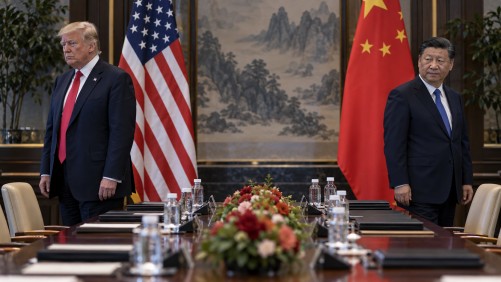
US President Donald Trump and Chinese President Xi Jinping concluded a three-day summit in Washington without reaching a major agreement on artificial intelligence (AI), despite mounting international concerns over the rapid development of the technology. The summit, which marked the first visit by a Chinese president to the White House in over a decade, primarily focused on extending the existing trade truce between the two nations for another two months.
During their discussions, Trump and Xi addressed various global issues, including the conflicts in Iran and Ukraine, as well as matters related to Taiwan and trade relations. AI was a significant topic, with President Xi emphasizing the shared responsibility of the United States and China to develop and manage AI responsibly. He stressed the importance of keeping the technology under human control and proposed enhanced cooperation between the two countries to tackle potential risks associated with AI advancements.
Despite the emphasis on AI, the summit concluded without the announcement of any frameworks, working groups, or agreements aimed at regulating the development of advanced AI systems or establishing common safety standards. President Trump has consistently underscored the importance of the United States maintaining its technological edge over China. During the summit, he promoted the term “super intelligence” to describe advanced AI, though specific details of their discussions on the technology were limited.
The summit also included a visit to the National Archives, where Trump and Xi viewed key US founding documents, underscoring the historical significance of the meeting. The two leaders are anticipated to reconvene later in the year at significant international forums, including the Asia-Pacific Economic Cooperation summit in China and the G20 summit in the United States.
