
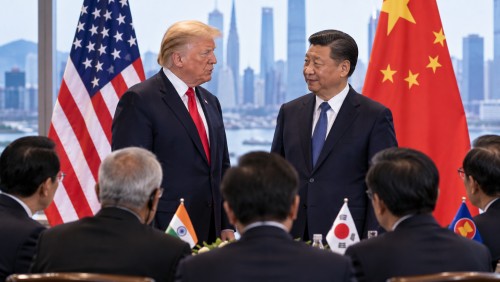
The upcoming meeting between U.S. President Donald Trump and Chinese President Xi Jinping has drawn significant attention from Asian allies, particularly concerning discussions that may impact Taiwan’s geopolitical situation. As the summit approaches, officials in Taiwan, Japan, and the United States are closely monitoring any potential shifts in U.S. policy or rhetoric that could affect regional security dynamics.
Taiwanese authorities anticipate that Xi will address the Taiwan issue with Trump, adding a layer of complexity to the already tense U.S.-China relations. While the U.S. has long maintained a policy that acknowledges China’s claim over Taiwan without endorsing it, Trump’s stance remains somewhat ambiguous, as he has not explicitly committed to defending Taiwan in case of a Chinese attack.
Japan, another key regional ally, is also keeping a close watch on the talks. Tokyo has urged Washington to adhere to established language regarding Taiwan to avoid escalating tensions in the region. Japanese officials are actively seeking avenues for Prime Minister Sanae Takaichi to engage with Trump prior to the discussions, underscoring the importance of maintaining stability.
A critical topic of concern is the potential U.S. arms sales to Taiwan. Trump has previously suggested that a proposed arms package could serve as a bargaining chip in negotiations with Beijing. However, the package remains pending approval, with China consistently opposing such sales and asserting its territorial claim over Taiwan.
While the summit’s primary focus is expected to revolve around U.S.-China economic relations, the Taiwan issue looms large for Washington’s Asian allies. Any developments could have significant implications for regional stability and the global semiconductor supply chain, in which Taiwan plays a crucial role. As the meeting date approaches, the international community remains vigilant about its outcomes and potential repercussions on the geopolitical landscape.
