
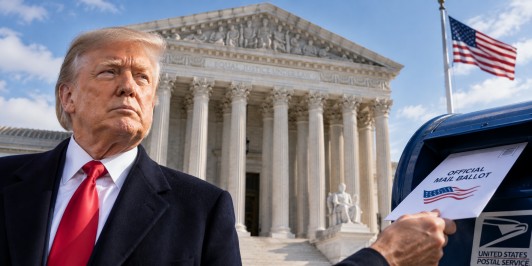
The U.S. Supreme Court has blocked the Trump administration’s proposed restrictions on mail-in voting, allowing states to continue distributing ballots under their current systems as the legal battle unfolds. This decision maintains an existing injunction against the new rules, a significant outcome given the reliance of millions of Americans on mail-in voting during elections.
The administration’s proposal aimed to impose new verification and processing procedures for mail ballots, including additional federal record checks, standardized envelopes, and an online voter information submission system. However, several states and voting rights groups challenged the initiative, arguing that the president lacks the constitutional authority to enforce nationwide election administration rules.
Election officials also expressed concerns that implementing such changes close to the midterm elections could disrupt the voting process, particularly as some states had already begun sending mail ballots while the proposed system was still under development. The Supreme Court’s order indicated that the administration was unlikely to prevail in its legal challenge at this stage, and the circumstances did not warrant lifting the lower court’s injunction.
This ruling has been praised by voting rights advocates and election officials, who argue that keeping existing procedures intact provides more stability for voters and local authorities. The controversy originated from an executive order directing the postal service to restrict certain mail ballot deliveries based on federal records, with the administration claiming federal oversight of the postal service grants it authority over election mail procedures.
Opponents of the changes contended that they could hinder the delivery of millions of ballots and cause confusion among voters and officials just before the elections. While the Supreme Court’s decision does not conclusively resolve the legality of the proposed restrictions, it ensures the current mail-ballot system remains operational as the broader legal challenge continues.
