
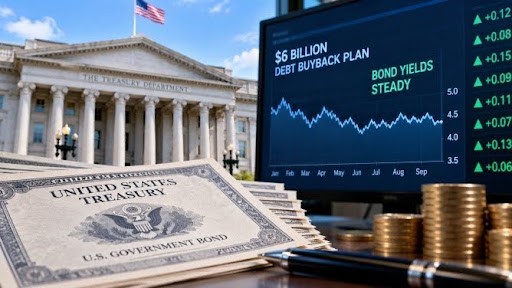
The US bond market remains unconvinced by the Treasury’s recent measures to curb borrowing costs, as government bond yields continue to rise. Despite the Treasury’s announcement of a $6 billion buyback of US Treasury securities, intended to calm a volatile market and alleviate upward pressure on interest rates, investors remain skeptical. The yield on the 10-year Treasury bond has surged to its highest level in three years, signaling ongoing concerns.
In a bid to stabilize the market, Treasury Secretary Scott Bessent unveiled the buyback plan on Wednesday. However, the effort has not eased investor anxiety, as the 30-year Treasury yield has reached about 5.2%, its highest point since the 2008 financial crisis. The persistent rise in yields is partly attributed to ongoing inflation woes and uncertainties stemming from the conflict in Iran, which have cast doubt on US government debt, traditionally seen as among the safest investments globally.
Back in August, Bessent disclosed plans to at least double the usual scale of debt buybacks, aiming to reduce the supply of bonds available to investors and potentially lower yields. Yet, yields have continued their upward trajectory, reflecting the market’s unease. The US national debt, which surpassed $40 trillion in August, has doubled over the past decade, posing additional challenges. Rising Treasury yields often lead to increased borrowing costs for consumers, affecting mortgage, student loan, and auto financing rates.
The pressure on the bond market compounds the US Federal Reserve’s challenges, as inflation remains elevated. Annual inflation peaked at a three-year high in May before slightly easing to 3.4% in July, still notably above the previous year’s rate. Energy costs have significantly contributed to these inflationary pressures. Concurrently, Brent crude prices have exceeded $100 per barrel amid tensions in the Middle East, further complicating the economic landscape.
This situation presents a conundrum for the Federal Reserve, which is tasked with managing inflation through interest rate adjustments while facing political pressures. President Donald Trump has consistently advocated for lower interest rates, adding another layer of complexity to the Federal Reserve’s decision-making process as it navigates these economic challenges.
