
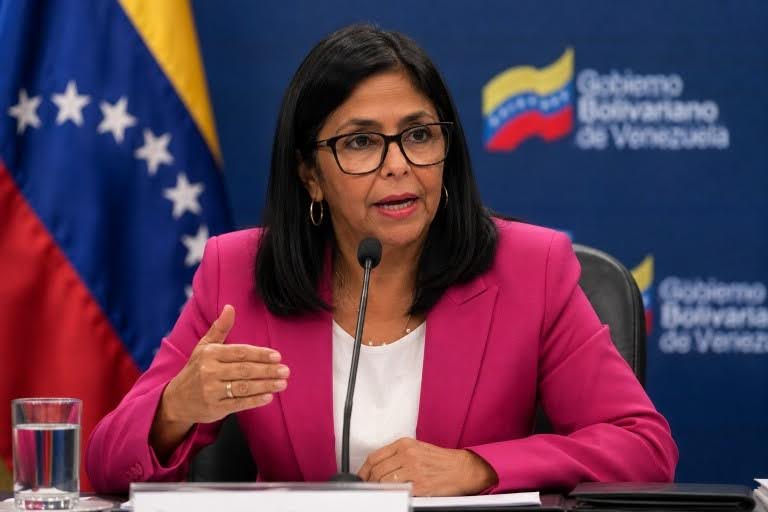
Venezuela’s interim president, Delcy Rodríguez, has staunchly defended a contentious energy agreement with the United States, asserting the nation’s continued ownership and sovereignty over its vast oil reserves. The deal, which has sparked intense criticism domestically, came under scrutiny after Rodríguez assumed power earlier this year following the ousting of Maduro in a U.S.-backed operation. In a national address, Rodríguez countered claims that she was ceding Venezuela’s natural resources to Washington, instead highlighting the agreement’s potential to generate over $209 billion in revenue and elevate Venezuela’s status as a leading energy producer.
Rodríguez emphasized that the country’s significant underground oil reserves are of little value without the necessary investment, technology, and infrastructure to harness them for meaningful economic progress for Venezuelans. The deal, reportedly negotiated discreetly over several months, would allow the U.S. to control a considerable portion of Venezuela’s crude reserves, which are the largest proven reserves globally, surpassing those of Saudi Arabia and Iran. According to Rodríguez, the agreement encompasses 17 strategic oilfields with an ambitious production target of more than 1.5 million barrels per day.
The announcement has ignited a wave of backlash from opposition leaders and members within Rodríguez’s political sphere. Critics have denounced the arrangement as a blatant resource grab, with a former state oil executive labeling it a betrayal of national sovereignty and noting that Venezuela has never before transferred reserves on such a scale. Demonstrators took to the streets in Caracas, decrying what they perceive as foreign encroachment, while social media users ridiculed the deal by suggesting a rebranding of the state oil company.
This development marks a significant shift for Rodríguez and her political movement, which has historically opposed foreign intervention in Venezuela’s natural resources. Rodríguez herself has previously issued public statements cautioning against such agreements. The controversy surrounding the deal has also raised concerns among opposition figures about its potential impact on efforts to reinstate democratic elections in Venezuela. Skeptics argue that the promise of economic benefits hinges on transparent governance and free elections, suggesting the agreement may be built on shaky ground if these conditions are not met.
