
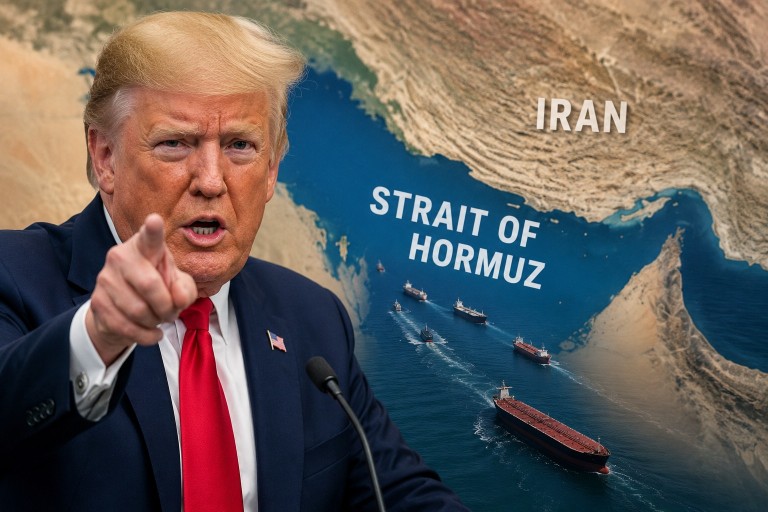
In a bold statement, U.S. President Donald Trump has indicated plans to declare the Strait of Hormuz as “a territory of the United States,” amidst ongoing tensions with Iran. This comes as part of Washington’s efforts to reach an accord with Tehran and bring an end to the existing conflict. Speaking in New York on Friday, Trump suggested that the U.S. would make this declaration “pretty soon” following a victory over Iran. He asserted that the U.S. already exerts control over this critical waterway through a blockade.
The Strait of Hormuz is a pivotal maritime route, through which approximately 20% of the world’s seaborne oil supplies are transported. Situated between Iran and Oman, the strait has largely been closed due to military actions initiated by the U.S. and Israel against Iran. The significance of this waterway in global oil distribution highlights the potential impact of its closure on international markets and energy supplies.
There is speculation about whether Trump’s comments signal an official change in U.S. policy or are merely a political maneuver. Iran has swiftly dismissed the threat, with Deputy Foreign Minister Kazem Gharibabadi asserting that U.S. pressure will not intimidate them. He emphasized that decisions regarding the strait’s status remain under Iran’s jurisdiction. Meanwhile, Iranian Foreign Minister Abbas Araqchi clarified that Tehran has yet to decide on whether to resume negotiations with Washington, noting that the messages exchanged through intermediaries like Qatar and Pakistan do not amount to formal discussions.
With the strait’s closure, Iran has laid out specific conditions that must be met before resuming shipping activities. These include demands for compensation for war-related damages, the lifting of sanctions, and the release of Iran’s frozen assets. The ongoing dispute has contributed to rising fuel prices, impacting consumers worldwide. Trump has defended these higher prices, arguing that Americans are paying more to prevent Iran from acquiring a nuclear weapon.
The unresolved standoff over the Strait of Hormuz continues to raise alarms about the stability of global energy resources and the broader economic consequences of the conflict. As tensions persist, the world watches closely, aware of the significant implications any developments in this region could have on international markets and political relations.
